Medical professionals across the United States are turning to an unconventional method for wound care: specially raised maggots. These FDA-cleared medical devices offer precision that surgical tools cannot match, though the treatment remains far from standard practice due to insurance barriers and limited clinical data.
Maggot therapy uses laboratory-raised fly larvae to remove dead tissue from wounds through a process called debridement. The treatment works without anesthesia and leaves healthy tissue intact, making it particularly valuable for patients who cannot undergo surgery.
How maggot therapy works
Medicinal maggots are not ordinary insects. These larvae are specially raised in laboratories to be completely germ-free, earning their classification as FDA-cleared medical devices. Unlike common misconceptions suggest, maggots do not bite tissue because they do not have teeth.
According to Dr. Ronald Sherman, a pioneer of modern maggot therapy and retired assistant professor at UC Irvine who serves as medical and scientific director at Cuprina, the treatment works through enzyme secretion. “They do not have teeth. They do not bite pieces from the tissue. They secrete their digestive enzymes which dissolve the dead infected tissue in the wound, and so only that tissue melts away. The healthy tissue stays behind,” he explained.
The maggots can be sold in sachets resembling tea bags to prevent them from wandering during treatment. This containment method addresses practical concerns while allowing the larvae to perform their work on the wound.
Precision beyond surgical tools
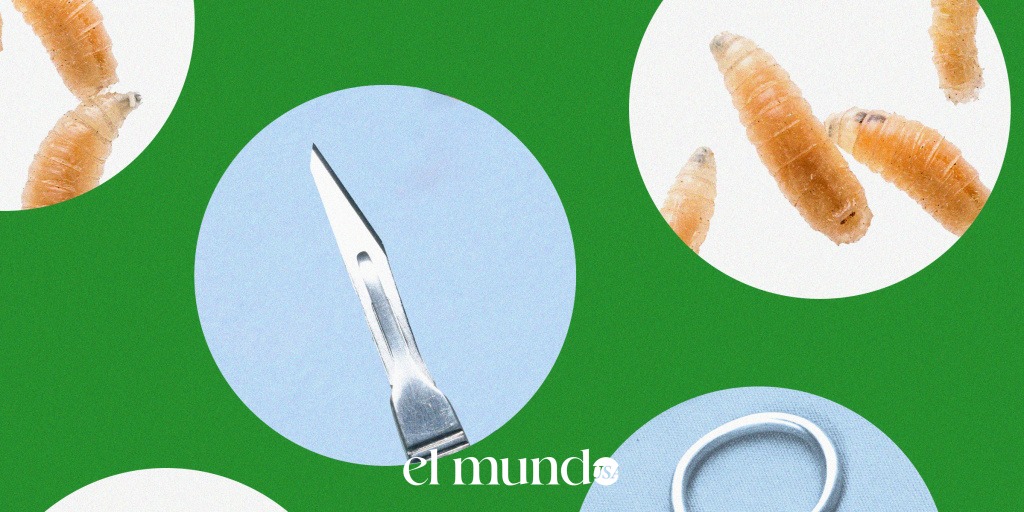
One key advantage of maggot therapy is the precision these larvae offer compared to traditional surgical debridement. Dr. Sherman described the limitations of surgical instruments: “Surgery tends to be a bit coarse. The scalpel is straight, and the border between healthy tissue and dead tissue is not straight. The surgeon’s vision is limited to a macroscopic level, not a cellular level, not a microscopic level.”
The treatment also eliminates surgical risks for vulnerable patients. “You don’t need anesthesia, which is the greatest risk for people who are deemed poor surgical candidates,” Dr. Sherman noted. This makes maggot therapy particularly valuable for patients with serious health conditions that prevent them from safely undergoing surgery.
Lisa Baxter, clinical director of the inpatient wound and ostomy care team at Tufts Medical Center in Boston, highlighted specific cases where maggot therapy proves beneficial. “We’ve had a couple patients awaiting heart transplant that had wounds that needed to be healed before they could get their transplant, so this is sort of a simple way to expedite the process,” she said.
Patient experiences with maggot treatment
Polly Cleveland, a New York City resident, used maggot therapy for her late husband Tom Haines in 2023. “After a stay in the hospital, he came back with this terrible sore on his left heel,” she recalled. “These kinds of wounds really smell foul.”
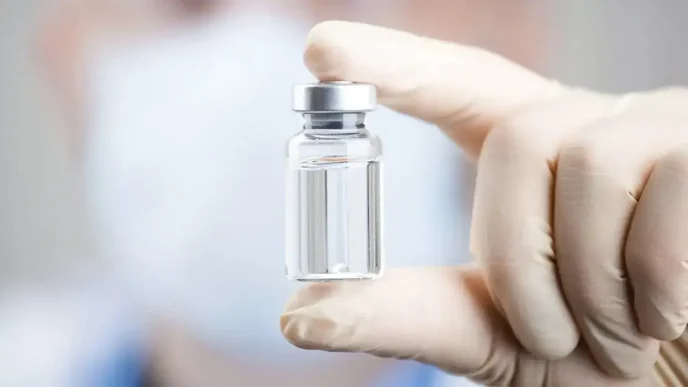
Cleveland described receiving the treatment materials: “You get this little vial with these teeny, tiny little maggots on a piece of gauze.” She applied them herself with positive results. “I stuck the maggots in, and by golly, they did their thing,” she said.
Larry Way, a 71-year-old patient from Malden, Massachusetts, received maggot therapy at Tufts Medical Center in 2021. He was hospitalized for an infected wound, and doctors determined that his condition was severe. “His feet were going to kill him,” medical professionals noted about his case.
Barriers to wider adoption
Despite its benefits, maggot therapy remains a niche treatment. Tufts Medical Center uses the therapy only once or twice a year, according to hospital staff. Several factors limit wider adoption.
Insurance reimbursement presents a significant obstacle. “Maggot therapy is not adequately reimbursed by our system of medicine,” Dr. Sherman stated. The cost for enough maggots to treat one or two wounds is approximately $400. By comparison, enzymatic debrider ointment costs around $450 for a week’s supply and can take more than 12 weeks to fully clean a wound.
There are also biological limitations. Baxter noted that wound suitability must be verified before treatment: “We have to make sure that the wound does not have Pseudomonas in it.” Maggots do not work well with this particular type of bacteria.
Medical community divided on maggot therapy
Not all physicians support expanding maggot therapy use. Dr. Sameer Patel, chief of plastic and reconstructive surgery at Temple University Hospital and Fox Chase Cancer Center in Philadelphia, expressed skepticism about the treatment.
“This is not what one would consider by any means standard of care,” Dr. Patel stated. He pointed to the limited evidence base: “The case reports and the things that we see in the literature are very unique situations.”
When asked about future adoption, Dr. Patel was direct: “Do I think it’s ever going to become a widespread modality? No, I don’t think that’ll happen.”
Last resort treatment saves lives
Dr. David Armstrong, director of the University of Southern California Limb Preservation Program, has used maggot therapy for patients with no other options. During the Covid pandemic, he treated a patient who had exhausted all conventional treatments.
“He failed anything that we tried and was quite ill, and was actually probably going to go to hospice and die within a couple of weeks because we couldn’t fix this wound,” Dr. Armstrong recalled. The conversation with the patient was straightforward: “We’ve tried A, B, C, D, E. The only thing that’s left is maggots.”
This case illustrates how maggot therapy often serves as a final treatment option rather than a first-line approach.
What we know so far
Medicinal maggots are FDA-cleared medical devices raised in sterile laboratory conditions. The treatment removes dead tissue through enzyme secretion rather than physical biting. It does not require anesthesia, making it suitable for patients who cannot undergo surgery. The cost is approximately $400 for treatment of one or two wounds. However, insurance reimbursement remains inadequate, and high-quality clinical data supporting widespread use is limited.
What happens next
Maggot therapy will likely continue as a niche treatment option primarily for patients who cannot undergo traditional surgical debridement. Insurance coverage and reimbursement rates will determine whether more medical facilities adopt the treatment. The psychological barrier among both patients and medical professionals remains a factor in adoption rates.
Frequently asked questions
Is maggot therapy painful?
No, maggot therapy is painless. The larvae dissolve dead tissue using digestive enzymes and do not have teeth to bite. The treatment does not require anesthesia.
Are medical maggots approved by the FDA?
Yes, medicinal maggots are FDA-cleared medical devices. They are specially raised in laboratories to be germ-free and sterile for medical use.
How much does maggot therapy cost?
Enough maggots to treat one or two wounds costs approximately $400. However, the treatment is not adequately reimbursed by most medical insurance systems, creating a barrier to access.
Who is a good candidate for maggot therapy?
Maggot therapy is primarily used for patients who cannot undergo surgical debridement, including those with conditions that make anesthesia too risky. The wound must not contain Pseudomonas bacteria for the treatment to be effective.
Medical maggots represent a specialized wound care option that continues to serve patients when conventional treatments fail. While the therapy offers unique precision and safety benefits for certain patient populations, its role in American medicine remains limited by insurance reimbursement challenges and the absence of high-quality clinical data supporting broader adoption.