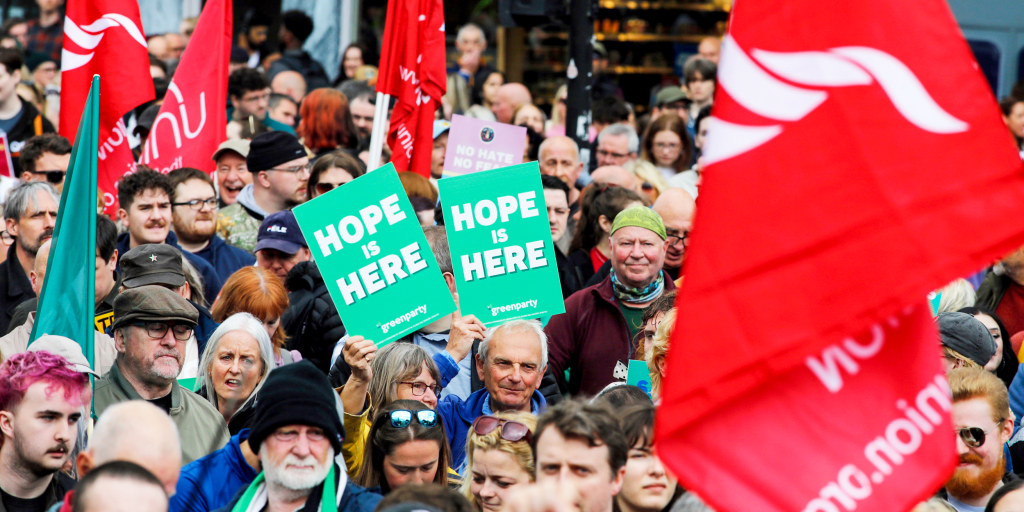
Thousands of demonstrators filled the streets of Belfast on Saturday to condemn anti-immigrant riots that erupted earlier this week in Northern Ireland. The peaceful Belfast anti-racism rally came after masked men set fire to homes, torched a bus, and attacked police officers in violent disturbances that left more than two dozen people homeless and 12 officers injured.
The riots followed the arrest of a 30-year-old Sudanese man on attempted murder charges related to a stabbing that left a victim partly blind. The violent response targeted homes believed to house immigrants, with rioters pelting police with bricks, bottles, and firebombs during the chaotic scenes that unfolded earlier in the week.
Main Developments in Belfast
Saturday’s anti-racism rally drew a large crowd of Belfast residents determined to show that the violent riots did not represent their community. Demonstrators gathered to send a clear message against the anti-immigrant violence that had shocked the city in recent days.
Elaine Crory, who spoke at the Belfast rally, addressed the underlying tensions that can spark such violence. “All it takes is for one person who’s not white and local to commit a crime and that fire of racism is rekindled,” Crory said during the demonstration.
Among those who attended the rally were newlyweds Cara Bell and Matthew Richardson. Bell described the stark contrast of emotions the city had experienced in recent days, calling it “a week where you’ve seen the worst of humanity and the best of humanity in Belfast.”
Bell emphasized the significance of the peaceful gathering. “It’s important to note that things like today really show that this is not the general feeling of people in Belfast,” she said, highlighting how the rally demonstrated community opposition to the earlier violence.
What We Know So Far
The anti-immigrant riots that sparked Saturday’s peaceful counter-demonstration occurred earlier in the week following news of a stabbing incident. A 30-year-old man from Sudan was arrested on attempted murder charges in connection with that attack. The stabbing victim was left partly blind as a result of the assault.
During the subsequent riots, masked men targeted homes they believed housed immigrants, setting several residences on fire. The violence also saw a bus torched in the chaos. Police officers responding to the disturbances faced intense hostility, with rioters throwing bricks, bottles, and firebombs at them.
The human toll of the riots was significant. More than two dozen people were left homeless after their residences were set ablaze. Twelve police officers sustained injuries during the violent clashes as they attempted to restore order.
Glasgow Also Sees Anti-Racism Demonstration
Belfast was not alone in holding an anti-racism demonstration on Saturday. Across the Irish Sea in Glasgow, Scotland, a similar rally took place as demonstrators gathered to oppose racist violence and rhetoric.
The Glasgow event saw anti-racism protesters face a smaller group of counter-demonstrators. That smaller group appeared to make Nazi salutes and shouted anti-Muslim chants during the confrontation.
Anti-racism demonstrators in Glasgow chanted “Nazi scum off our streets” in response to the far-right presence at their rally.
The tensions in Glasgow also affected local religious communities. A mosque in the Scottish city went into lockdown amid the heightened atmosphere surrounding the demonstrations.
Impact on Communities
The riots in Belfast left lasting damage to both property and the sense of safety among immigrant communities. With more than two dozen people displaced from their homes, local services faced the challenge of providing emergency shelter and support to those affected.
The 12 police officers injured during the disturbances highlighted the dangerous nature of the confrontations. Officers faced sustained attacks while attempting to protect lives and property during the riots.
The peaceful rally on Saturday represented an effort by Belfast residents to reclaim the narrative around their city and demonstrate that the violent actions of rioters did not reflect broader community values.
The Arrest That Preceded the Violence
The arrest of a 30-year-old Sudanese man on attempted murder charges served as the catalyst for the anti-immigrant riots. The man faces charges related to a stabbing that caused severe injuries to the victim, including partial blindness.
It is important to note that the suspect has been arrested on charges and has not been convicted. The legal process remains ongoing.
The violence that followed the arrest represented a response by rioters who targeted immigrant communities broadly, setting fire to homes they believed housed foreign-born residents regardless of any connection to the alleged crime.
What Happens Next
Authorities in Belfast continue to address the aftermath of the riots while managing community tensions. Those displaced by the fires require ongoing support as they seek alternative housing and attempt to recover belongings lost in the blazes.
The investigation into the riots themselves will likely continue as police work to identify those responsible for setting fires, attacking officers, and causing property damage during the violent disturbances.
The legal proceedings against the 30-year-old Sudanese man arrested on attempted murder charges will proceed through the court system.
Important Details
The Belfast anti-racism rally took place on Saturday, June 13, 2026, drawing thousands of participants to the demonstration.
The anti-immigrant riots that preceded the rally occurred earlier in the week, resulting in significant damage and displacement.
Key figures from the events include 30 as the age of the arrested suspect, more than two dozen people left homeless, and 12 police officers injured during the riots.
Both Belfast in Northern Ireland and Glasgow in Scotland saw anti-racism demonstrations on Saturday, with the Glasgow event featuring confrontations between anti-racism protesters and a smaller group displaying Nazi salutes.
Frequently Asked Questions
What happened in Belfast this week?
Anti-immigrant riots erupted earlier in the week after a 30-year-old Sudanese man was arrested on attempted murder charges for a stabbing. Rioters set fire to homes, torched a bus, and attacked police. On Saturday, thousands gathered for an anti-racism rally to condemn the violence.
How many people were affected by the Belfast riots?
More than two dozen people were left homeless after rioters set fire to homes believed to house immigrants. Additionally, 12 police officers were injured during the disturbances when they were pelted with bricks, bottles, and firebombs.
Was there also a rally in Glasgow?
Yes, an anti-racism rally also took place in Glasgow, Scotland, on Saturday. Demonstrators there faced a smaller group that appeared to make Nazi salutes and shouted anti-Muslim chants. A mosque in Glasgow went into lockdown during the tensions.
What are the charges against the arrested man?
The 30-year-old man from Sudan was arrested on attempted murder charges in connection with a stabbing that left the victim partly blind. He has been charged but not convicted, and legal proceedings are ongoing.
Saturday’s demonstrations in Belfast and Glasgow reflected a community response to the violent anti-immigrant riots that had unfolded earlier in the week. The peaceful gatherings provided residents an opportunity to express opposition to the violence while authorities continued to address the aftermath of the destruction and displacement caused by the riots.