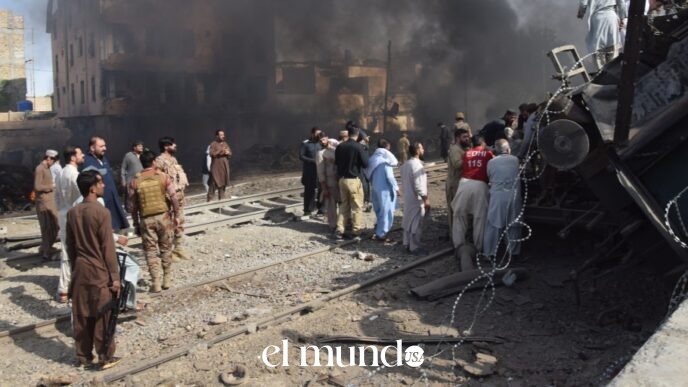

Russia struck the Ukrainian capital Kyiv with a massive combined drone and missile attack on Sunday, May 24, 2026, deploying the hypersonic Oreshnik ballistic missile for only the third time since the war began four years ago. At least two people were killed and damage was recorded across 40 locations in the city, including residential buildings, schools and areas near government offices.
The attack involved 600 strike drones and 90 air, sea and ground-launched missiles, making it one of the largest aerial assaults on the capital during the conflict. Ukrainian air defenses destroyed and jammed 549 drones and 55 missiles, while approximately 19 missiles failed to reach their intended targets, according to Ukrainian officials.
Main developments
The hypersonic Oreshnik missile struck the city of Bila Tserkva in the Kyiv region, though the specific target was not immediately clear. The Oreshnik, capable of traveling at speeds up to Mach 10, represents one of the most advanced weapons in the Russian arsenal. This marks only the third time Russia has deployed this particular missile system during the four-year war.
Russia first used the Oreshnik on the city of Dnipro in November 2024. The second deployment occurred in January 2026 in the western Lviv region. The use of this weapon against targets near the capital signals an escalation in the types of armaments Russia is willing to deploy against major Ukrainian population centers.
A five-story residential building in Kyiv’s Shevchenko district was directly hit during the assault, killing one person. A school building was also damaged while people were sheltering inside, though casualty figures from that location were not immediately confirmed. Damage was recorded in several districts across the city, affecting civilian infrastructure throughout the capital.
Tymur Tkachenko, head of the Kyiv military administration, confirmed the scale of the damage across the city. Mayor Vitalii Klitschko also addressed the attack’s impact on residents. Regional governor Mykola Kalashnyk provided information about the Oreshnik strike on Bila Tserkva in the broader Kyiv region.
What we know so far
Ukrainian officials confirmed the following details about the attack:
The assault included 600 strike drones and 90 missiles launched from air, sea and ground platforms. Ukrainian air defense systems successfully intercepted or jammed 549 drones and destroyed 55 missiles. An additional 19 missiles reportedly failed to reach their targets. Damage was confirmed at 40 separate locations across multiple districts of Kyiv.
At least two people were confirmed dead in Kyiv as a result of the attack. One death occurred when a five-story residential building in the Shevchenko district was struck. Buildings damaged included residences, a school and structures near government offices.
Russia’s Defense Ministry confirmed the attack, stating it was carried out in retaliation for Ukrainian strikes on Russian territory. The ministry’s statement came amid ongoing tensions over cross-border operations by both sides.
Residents describe terrifying night
Kyiv residents described the overnight assault as unlike anything experienced during the four years of war. One resident characterized the attack directly, saying, “It was a terrible night, and there had never been anything like it in the entire war.”
Svitlana Onofryichuk, a 55-year-old Kyiv resident, expressed devastation at the destruction: “I am very sorry that I have to say goodbye to Kyiv now, I am not staying there anymore, there is no possibility. My job is gone, everything is gone, everything has burned down.”
Yevhen Zosin, a 74-year-old resident, recounted the force of the explosions: “Then there was another explosion and she and I were thrown back like a pin by the shock wave. We both survived, she and I. My apartment was blown to pieces.”
These accounts reflect the human toll of the attack beyond the confirmed casualties, with residents facing displacement and destruction of their homes and workplaces.
Diplomatic response and accusations
Ukrainian President Volodymyr Zelenskyy addressed the attack as part of ongoing international discussions about the war. At the United Nations Security Council, Ukrainian Ambassador Andrii Melnyk referenced operations that occurred on May 22, 2026, in the context of discussions about the conflict.
Russia has accused Ukraine of conducting strikes on Russian territory, including an attack on Starobilsk. The death toll from the Starobilsk strike rose to 21, with 42 people injured. Two days of mourning were declared in the Luhansk region following that incident.
Ukrainian officials described certain Russian claims as a “pure propaganda show” and stated that Ukrainian operations “exclusively targeted the Russian war machine.” The competing narratives highlight the contested information environment surrounding military operations on both sides.
Separately, Russian authorities reported that a Ukrainian drone killed a civilian in the Russian town of Grayvoron. Russia claimed to have shot down or jammed 33 Ukrainian drones overnight.
What happens next
The scale of this attack and the continued use of the Oreshnik hypersonic missile indicate that Russia possesses advanced weapons capabilities it is willing to deploy against major Ukrainian cities. Ukrainian air defenses demonstrated significant effectiveness, neutralizing the majority of incoming threats, but the volume of projectiles allowed some to reach their targets.
Residents in affected areas face cleanup and recovery operations. Those displaced by damage to residential buildings will need to find alternative housing. The attack on infrastructure near government offices may affect administrative functions in the capital.
The international community continues to monitor the situation. Discussions at the UN Security Council reflect ongoing diplomatic efforts regarding the conflict, though concrete outcomes from those discussions were not detailed in official statements.
Important details
The Oreshnik missile travels at approximately Mach 10, making it extremely difficult to intercept with conventional air defense systems. Its deployment represents a significant escalation in the type of weaponry used against Ukrainian cities.
Kyiv residents should be aware that 40 locations across several districts sustained damage. Areas affected include the Shevchenko district, where the residential building was struck, and locations near schools and government buildings.
Ukrainian air defenses have demonstrated the capacity to intercept a significant percentage of incoming threats. Of the 600 drones launched, 549 were destroyed or jammed, representing a success rate of over 90 percent for drone interception. Of 90 missiles fired, 55 were destroyed and 19 failed to reach targets, meaning approximately 16 missiles struck locations in or around Kyiv.
Frequently asked questions
What is the Oreshnik missile?
The Oreshnik is a Russian hypersonic ballistic missile capable of traveling at speeds up to Mach 10. This attack on the Kyiv region marked only the third time Russia has used this weapon during the four-year war, following deployments against Dnipro in November 2024 and the Lviv region in January 2026.
How many people were killed in the Kyiv attack?
Ukrainian officials confirmed at least two people were killed in Kyiv during the May 24, 2026, attack. One death occurred when a five-story residential building in the Shevchenko district was struck. Additional casualties may be confirmed as recovery operations continue.
How effective were Ukrainian air defenses?
Ukrainian air defense systems destroyed and jammed 549 of the 600 drones launched and intercepted 55 of the 90 missiles fired. An additional 19 missiles reportedly failed to reach their targets. This means Ukrainian defenses neutralized the vast majority of incoming projectiles, though some still struck the capital.
The attack on May 24, 2026, stands as one of the largest aerial assaults on Kyiv since the war began four years ago. The combination of conventional drones, cruise missiles and the advanced Oreshnik hypersonic missile demonstrates the range of Russian capabilities being deployed against the Ukrainian capital. Ukrainian officials continue to assess damage and provide support to affected residents as recovery efforts proceed across the city.