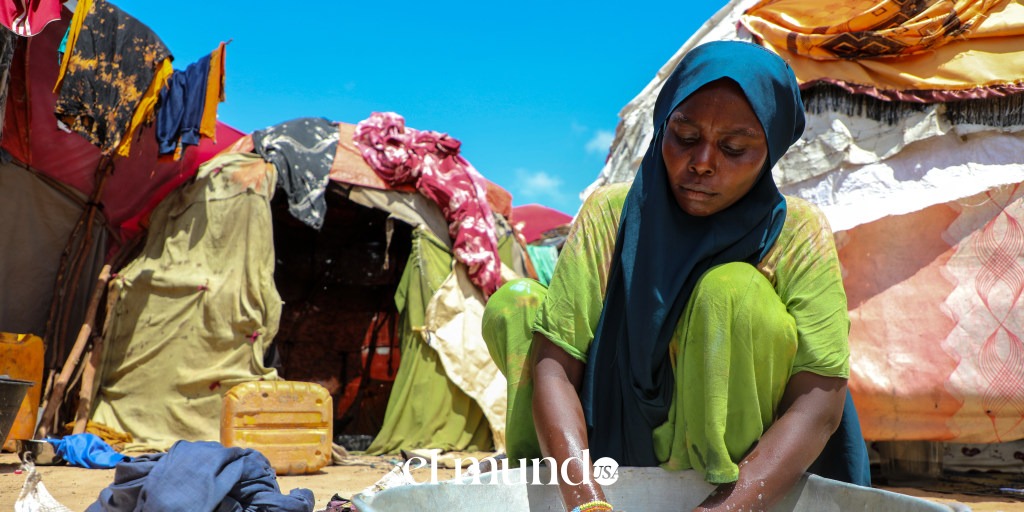
Somalia faces a rapidly deteriorating food security emergency as the ongoing Middle East conflict disrupts global supply chains, sending fuel and food prices soaring while humanitarian funding plummets to a fraction of previous levels. Six million people, representing 31 percent of the population, are now experiencing high levels of acute food insecurity, with the Integrated Food Security Phase Classification warning of famine risk in Burhakaba district.
The crisis compounds the effects of Somalia’s longest recorded drought, which killed at least 43,000 people between 2021 and early 2023 and displaced more than 1.5 million. Now, disruptions to shipping through the Strait of Hormuz are strangling supply chains that East African nations depend on for fuel, fertilizer and basic commodities.
Supply Chain Disruptions Driving Price Surges
The Middle East conflict has created severe bottlenecks in global trade routes, with one-third of globally traded fertilizer shipped by sea having passed through the Strait of Hormuz before the war began. The disruption is hitting Somalia’s agricultural sector and food markets hard.
Diesel and gas prices have surged up to 60 percent in parts of Somalia, affecting transportation costs and agricultural operations. Fertilizer prices have climbed sharply, with urea increasing from $40 to $65 per 50-kilogram sack, a 62.5 percent jump. DAP fertilizer prices have risen by 20 percent.
Mustafe Denbil, chairman of Horn Gardens agricultural shop in Hargeisa, Somalia, described the impact on local farmers: “Now, when families come to our store, they may not get all what they need as they used to five months ago. The small farmers cannot even afford to buy at this new price.”
Denbil expressed the desperation felt by many Somalis: “We’re really hoping that war to end, because it’s life-threatening to us.”
Food Prices Climb as Families Struggle
Basic food staples have become increasingly unaffordable for ordinary Somalis. Sugar prices have increased by 13.3 percent, rice by 9.6 percent, flour by 16 percent, cooking oil by 21.4 percent, and milk by 42.8 percent.
These price increases come at a time when nearly 2 million young children are acutely malnourished. Half a million children are severely malnourished and require urgent treatment.
Ricardo Pires, spokesperson for the UN Children’s Fund, confirmed the scale of the child malnutrition crisis: “Nearly 2 million young children are acutely malnourished.”
The 1.9 million people currently facing emergency conditions represent the most vulnerable segment of Somalia’s population, requiring immediate assistance to survive.
What We Know So Far
The Integrated Food Security Phase Classification has identified a risk of famine in Burhakaba district. A famine has not been officially declared, but conditions are deteriorating rapidly.
George Conway, the UN’s top aid official in Somalia, warned that the situation is exceeding projections: “The humanitarian context in Somalia is worsening faster than we originally projected and expected.”
Somalia last experienced a declared famine in 2011. Famines were declared in South Sudan in 2017 and 2020, illustrating the ongoing vulnerability of the region to food security emergencies.
The current crisis results from multiple compounding factors: poor rainfall, the lingering effects of the 2021-2023 drought, Middle East conflict supply chain disruptions, and a dramatic collapse in humanitarian funding.
Humanitarian Funding Collapse
International humanitarian assistance has dropped precipitously over recent years. During the height of the drought in 2022, humanitarian funding reached $2.38 billion. By 2025, that figure had fallen to $531 million. In 2026, funding has collapsed to just $160 million.
Currently, humanitarian assistance covers only 12 percent of those facing crisis levels of food insecurity, leaving the vast majority of vulnerable Somalis without adequate support.
Richard Crothers, the International Rescue Committee’s country director in Somalia, characterized the situation as a systemic failure: “This is a crisis of access, affordability and global political failure. Somalia risks becoming one of the clearest examples of what happens when early warnings are ignored and humanitarian systems are allowed to erode.”
Regional Impact Extends Beyond Somalia
The disruption to fertilizer supplies and fuel prices is affecting agricultural production throughout East Africa. Seleshi Bekele Awulachew, Ethiopia’s former minister of water, irrigation and energy, warned of the broader regional implications.
“All of us are exposed, be it Kenya, Tanzania, all the way down to South Africa,” Awulachew said. He cautioned that scarce fertilizer supplies would have cascading effects on food production: “Scarce fertilizer supply means you don’t apply adequate fertilizer, or you may not even apply fertilizer. So it will create really serious crisis in the region if this problem persists.”
What Happens Next
Without significant increases in humanitarian funding and resolution of the Middle East conflict disrupting supply chains, conditions in Somalia are expected to continue deteriorating. The IPC warning of famine risk in Burhakaba district signals that official famine declarations could follow if current trends persist.
The 500,000 severely malnourished children requiring urgent treatment represent an immediate priority, as their survival depends on access to therapeutic feeding programs and medical care that remain underfunded.
Poor rainfall continues to compound the crisis, limiting agricultural recovery even as the country attempts to rebuild from the devastating 2021-2023 drought that killed at least 43,000 people.
Important Details
Somalia’s population continues to face the aftermath of the longest recorded drought in the country’s history, which occurred between 2021 and early 2023. That disaster killed at least 43,000 people and displaced more than 1.5 million from their homes.
The current food insecurity affects 31 percent of Somalia’s population, with 1.9 million people in emergency conditions requiring immediate assistance. The 12 percent coverage rate of humanitarian assistance means that the overwhelming majority of those in need are not receiving adequate support.
The sharp decline in humanitarian funding from $2.38 billion in 2022 to $160 million in 2026 represents a reduction of more than 93 percent over four years, even as needs have remained severe.
Frequently Asked Questions
Has famine been declared in Somalia?
No famine has been officially declared. The IPC has identified a risk of famine in Burhakaba district, but conditions have not yet met the technical threshold for a famine declaration.
How many people in Somalia are facing food insecurity?
Six million people, representing 31 percent of Somalia’s population, are experiencing high levels of acute food insecurity. Of these, 1.9 million are facing emergency conditions.
Why is the Middle East conflict affecting Somalia?
The conflict has disrupted shipping through the Strait of Hormuz, where one-third of globally traded fertilizer was shipped before the war. This has caused fuel prices to surge up to 60 percent in parts of Somalia and driven sharp increases in fertilizer and food prices.
How many children in Somalia are malnourished?
Nearly 2 million young children are acutely malnourished, with 500,000 severely malnourished children requiring urgent treatment.
The humanitarian situation in Somalia remains critical as multiple crises converge. The combination of supply chain disruptions from the Middle East conflict, poor rainfall, drought recovery challenges, and dramatically reduced international funding has created conditions that UN officials say are worsening faster than originally projected.