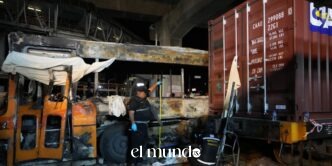
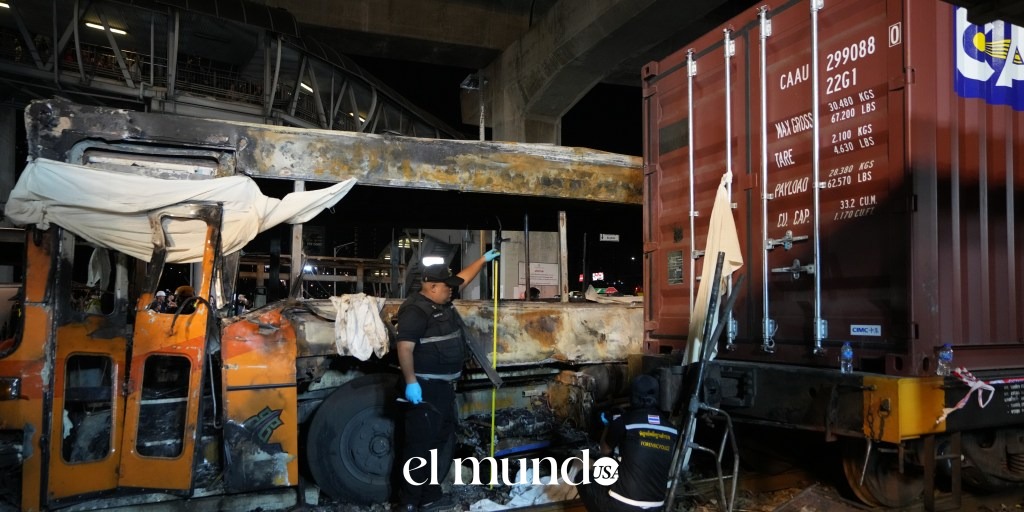
Thai police have charged a freight train driver with negligence causing death after a devastating collision with a public bus at a rail crossing in central Bangkok on Saturday, May 16, 2026. The crash killed eight people and left 32 others injured, making it one of the deadliest transportation accidents in the Thai capital in recent memory.
The collision sparked a fire that engulfed the bus and dragged several nearby vehicles along the tracks, creating a chaotic scene that required extensive emergency response efforts. Authorities have since cleared the site and restored train services, while announcing plans to tighten safety measures across the transportation network.
Main Developments
According to Urumporn Koondejsumrit, head of the Makkasan Police Station, the train driver has been formally charged following an investigation into the circumstances of the collision. The charges stem from evidence gathered at the scene and witness accounts of the incident.
“The train driver has been charged with negligence causing death, as evidence clearly indicates reckless conduct leading to fatalities,” Koondejsumrit stated to reporters.
The public bus was reportedly stopped on the tracks at a red light when the freight train struck it. The impact was severe enough to ignite a fire that quickly consumed the bus, while the force of the collision dragged multiple vehicles that were near the crossing along the railway tracks.
The bus driver will also face charges in connection with the incident. However, that individual remains under medical treatment and has not yet been formally charged. Authorities have indicated that legal proceedings against the bus driver will proceed once medical conditions permit.
What We Know So Far
The confirmed details of the Saturday collision paint a picture of a catastrophic failure at a rail crossing in central Bangkok. Eight people lost their lives in the crash, while 32 others sustained injuries of varying severity. The collision occurred when a freight train struck a public bus that had stopped on the tracks.
The subsequent fire that engulfed the bus added to the severity of the incident. Emergency responders worked to extinguish the flames while attending to the injured and recovering victims from the scene.
The incident has drawn attention to transportation safety in Thailand. According to the World Health Organization, Thailand’s roads rank among the world’s deadliest, a statistic that underscores the broader concerns about traffic and transportation safety in the country.
Deputy Transport Minister Siripong Angkasakulkiat addressed the incident and expressed frustration with the circumstances that led to the tragedy.
“It should not have happened. I want all drivers to understand traffic laws properly,” Angkasakulkiat said.
What Happens Next
Thai authorities have announced they will tighten safety measures and increase oversight in response to the fatal collision. While specific details about what these enhanced safety protocols will include have not been disclosed, officials have made clear their commitment to preventing similar tragedies.
The train driver who has been charged will face legal proceedings related to the negligence charges. The bus driver’s charges remain pending due to ongoing medical treatment.
Services at the rail crossing have been restored following the clearance of the accident site. Investigators completed their work at the scene, allowing normal operations to resume for commuters who rely on the rail line.
Witness Accounts
Thanphisit Nawatkonoangkoon, a 20-year-old train commuter, was among those who witnessed the aftermath of the collision. The young commuter’s presence highlights how the incident affected not only those directly involved in the crash but also the broader community of people who use the transportation network daily.
The collision disrupted regular train service and caused significant concern among commuters about safety at rail crossings throughout the Bangkok area.
Important Details
The crash resulted in eight confirmed fatalities and 32 injuries. The bus was stationary on the tracks at a red light at the time of impact. The collision caused a fire that engulfed the bus. Several vehicles near the crossing were dragged along the tracks by the force of the collision.
The train driver faces charges of negligence causing death. The bus driver will be charged but is currently receiving medical treatment. Thai authorities have pledged to implement stricter safety measures and oversight.
The World Health Organization has previously identified Thailand’s roads as among the most dangerous in the world, providing context for the ongoing safety challenges the country faces in its transportation sector.
Frequently Asked Questions
How many people died in the Bangkok train crash?
Eight people were killed in the collision between a freight train and a public bus at a rail crossing in central Bangkok on Saturday, May 16, 2026. An additional 32 people were injured in the crash.
What charges does the train driver face?
The train driver has been charged with negligence causing death. According to the head of Makkasan Police Station, evidence indicates reckless conduct that led to the fatalities.
Will the bus driver also be charged?
Authorities have indicated the bus driver will face charges related to the incident. However, the bus driver is currently under medical treatment, and formal charges have not yet been filed.
What caused the fire during the collision?
The collision between the freight train and the public bus sparked a fire that engulfed the bus. The impact also caused several nearby vehicles to be dragged along the tracks.
Have train services resumed at the crash site?
Yes, authorities have cleared the site and restored train services following the completion of the initial investigation and cleanup efforts.
Safety Concerns in Thailand
The Bangkok rail crossing collision has renewed focus on transportation safety in Thailand. The World Health Organization has classified Thailand’s roads among the deadliest in the world, a designation that reflects persistent challenges with traffic safety and enforcement.
Deputy Transport Minister Siripong Angkasakulkiat’s statement that the collision should not have happened reflects official acknowledgment that preventable factors contributed to the tragedy. His call for drivers to understand traffic laws properly suggests authorities view education and compliance as key components of improving safety.
The promise to tighten safety measures and oversight indicates government recognition that systemic changes may be necessary to prevent future incidents at rail crossings and other vulnerable points in the transportation network.
Ongoing Investigation
While the train driver has already been charged, the investigation into the full circumstances of the collision continues. The pending charges against the bus driver indicate that authorities are still working to establish the complete picture of what led to the fatal crash.
The fact that the bus was stopped on the tracks at a red light when struck raises questions about signaling, timing, and the protocols in place at the crossing. Authorities have not released detailed information about the specific safety measures that were or were not in place at the location of the collision.
The restoration of services and clearance of the crash site allows normal operations to continue while investigators pursue answers about how to prevent similar incidents in the future. Families of the victims and the injured await further information about accountability and the specific steps authorities will take to enhance safety.