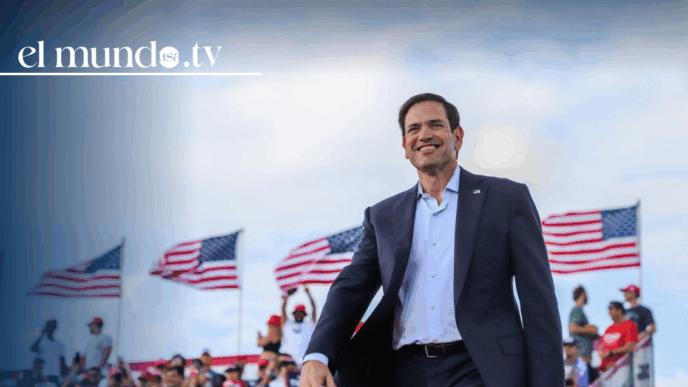
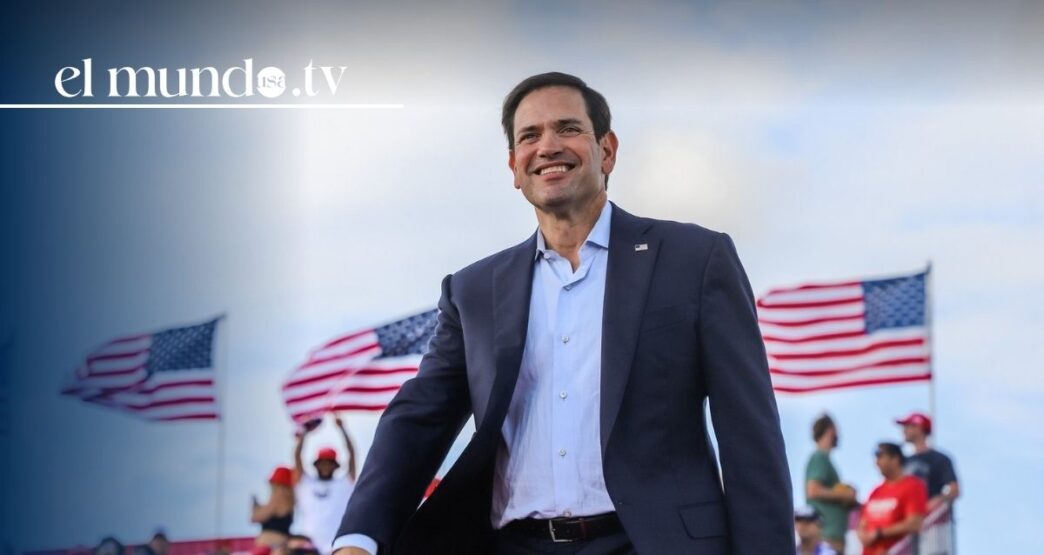
US Secretary of State Marco Rubio said on Wednesday, January 28, that the Trump administration’s policy toward Venezuela seeks to build a “friendly, stable, prosperous, and democratic” nation in which free and fair elections are held. Rubio made these statements at a hearing before the US Senate Foreign Relations Committee to explain the US course of action following the capture of former Venezuelan President Nicolás Maduro on January 3, 2026.
Rubio emphasized that this goal will not be achieved “in a matter of weeks”, but will require “some time and a gradual transition process” to ensure that all sectors of society fully participate in Venezuela’s political future.
The U.S. seeks a democratic transition and stability in Venezuela
During his remarks, the head of U.S. diplomacy explained that Maduro’s capture marked the start of a new phase and that Washington’s strategy has several phases:
- Immediate stabilization: Prevent the outbreak of internal conflict or mass migration following Maduro’s departure.
- Transitional financial support: Create mechanisms for Venezuela to sell sanctioned oil under U.S. oversight and allocate those revenues to essential public services.
- Economic recovery and political opening: Promote structural reforms, normalize the oil industry, and ensure that elections are truly free and fair.
Rubio applauded the Venezuelan Assembly’s removal of restrictions on hydrocarbons to attract private investment, although he insisted that the changes must be accompanied by broad political spaces for the opposition.
Follow our accounts on Facebook and Instagram to stay up to date with the latest news.
Free elections in Venezuela: Rubio emphasizes fair conditions
Rubio also emphasized that for elections to be free and fair, the opposition must have full access to the media and effective political participation. Without these guaranties, he insisted, the elections would not meet international democratic standards.
Additionally, he recalled that there are still about 2,000 political prisoners in Venezuela, although he admitted that releases have been “slower than expected”.
Relationship with Delcy Rodríguez and threat of force
In response to questions about U.S. investigations into interim president Delcy Rodríguez for alleged ties to drug trafficking, Rubio clarified that, unlike Maduro, Rodríguez is not currently under indictment in U.S. courts.
Rubio also warned that if the interim government does not fully cooperate with the Trump Administration’s demands, the United States would be “prepared to use force” or take more severe measures, although he reiterated that diplomacy and cooperation remain the preferred methods.
Read more: Trump escalates tensions with Iran: announces dispatch of larger fleet than that used in Venezuela
Diplomacy and the political future in Venezuela
Marco Rubio’s appearance before the Senate comes on the same day that Venezuelan opposition leader María Corina Machado was received at the U.S. State Department. Machado argues that a democratic transition supported by the international community could turn Venezuela into a symbol of freedom in Latin America, akin to historic moments such as the fall of the Berlin Wall.
Rubio reaffirmed that the United States is not seeking a permanent military occupation of Venezuela, but rather to promote a democratic and stable future, although he stressed that “there is still much work ahead” to achieve it.