
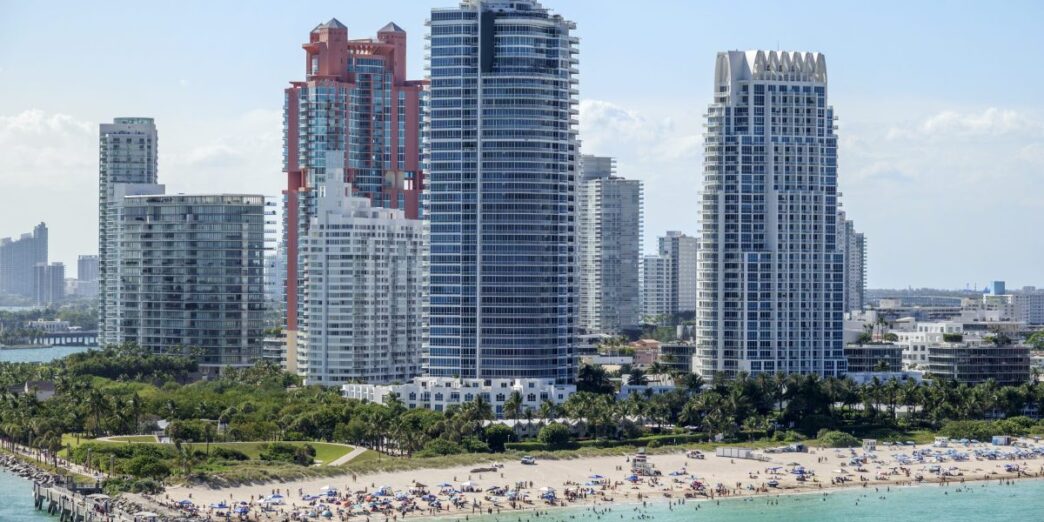
Headlines have been circulating across social media claiming that Miami has officially become more expensive than New York City. But before you start reconsidering your plans to move to the Sunshine State, it’s essential to understand what these numbers actually mean—and why the reality is far more nuanced than a simple price comparison suggests.
What the Data Really Shows About Cost of Living
The Bureau of Economic Analysis recently released data indicating that Miami’s cost of living has surpassed New York’s for the first time in history. However, this doesn’t mean that a Miami apartment now costs more than a Manhattan unit. In fact, the numbers tell a very different story when you examine them closely. As of May 2026, Manhattan’s median listing price per square foot stood at $1,489—more than three times higher than Miami-Dade County’s $465, according to Federal Reserve Bank of St. Louis data.
The key distinction lies in understanding what “cost of living” actually measures. This metric weighs prices against what local residents earn, not raw dollar amounts. What has changed is that Miami’s prices have climbed significantly relative to the average Miami resident’s income, while New York’s price-to-income ratio has remained more stable. Both cities remain extremely expensive, but the affordability equation has shifted dramatically in South Florida.
“Affordability now in Miami, especially—and listen, I feel really badly for the people who were living in Miami before this influx of new residents, and now all of a sudden the restaurant costs are going up, the transportation costs are going up, insurance costs are going up, rent is going up, tuition to send your kids to school is going up.” — Michelle Griffith, Douglas Elliman broker
Hidden Costs That Hit Miami Residents Harder
Understanding the cost of living comparison requires examining the categories that affect daily life differently in each city. Cost-of-living indexes incorporate expenses that barely register for a Manhattan renter but significantly impact Miami households. These hidden costs paint a clearer picture of why affordability has become such a pressing concern in South Florida.
- Car ownership and maintenance—essential in Miami’s sprawling metro, optional in New York
- Rising insurance premiums, particularly for property and auto coverage
- Private school tuition costs that have increased substantially
- Restaurant prices that have climbed faster than the national average
- Transportation expenses beyond public transit options
South Florida’s consumer price index has risen 36% since 2019—more than any metro area tracked by the federal government, except Tampa. These increases have nothing to do with Manhattan real estate prices but everything to do with daily life expenses for Miami families.
The Employment Picture: Jobs and Opportunity
When examining the cost of living debate, employment data provides crucial context. New York City’s metro area added 86,800 jobs through December 2025, more than double Miami’s total and exceeding the combined job gains in Dallas, Philadelphia, and Atlanta combined, according to the NYCEDC’s monthly economic snapshot. Miami’s metro area added 42,600 jobs during the same period.
However, these raw numbers don’t tell the complete story. Miami’s smaller population of 6.4 million means the region is actually generating new jobs at a faster per-capita rate than New York. Miami created roughly 6.7 new jobs per 1,000 residents compared to New York’s 4.4 per 1,000. For Latino professionals considering relocation, this job growth rate could signal expanding opportunities in South Florida’s evolving economy.
Real Estate Reality Check: Prime Location Comparisons
Despite the cost of living headlines, real estate prices in prime locations tell a straightforward story. Even Miami’s most exclusive neighborhood, Fisher Island, posted a first-quarter 2026 price per square foot of $2,391—still below Manhattan’s overall condo average of $2,431 per square foot. When comparing luxury to luxury, New York maintains its position as the pricier market.
Real estate professionals emphasize that the underlying data compared broad swaths of South Florida against greater New York City, not equivalent neighborhoods or property types. This methodology can create misleading impressions about actual housing costs for prospective buyers or renters evaluating their options.
What This Means for Latino Families
For the Latino community considering either city, understanding these cost of living nuances is essential for financial planning. Miami offers advantages including cultural familiarity, Spanish-language accessibility, and proximity to Latin America. However, the affordability squeeze affects working families most severely, particularly those who established roots before the recent population influx.
New York presents higher raw prices but potentially better income-to-expense ratios for certain professions, plus extensive public transportation that eliminates car-related costs. Each family must evaluate their specific circumstances, career opportunities, and lifestyle preferences when making this significant decision about where to build their future in the United States.