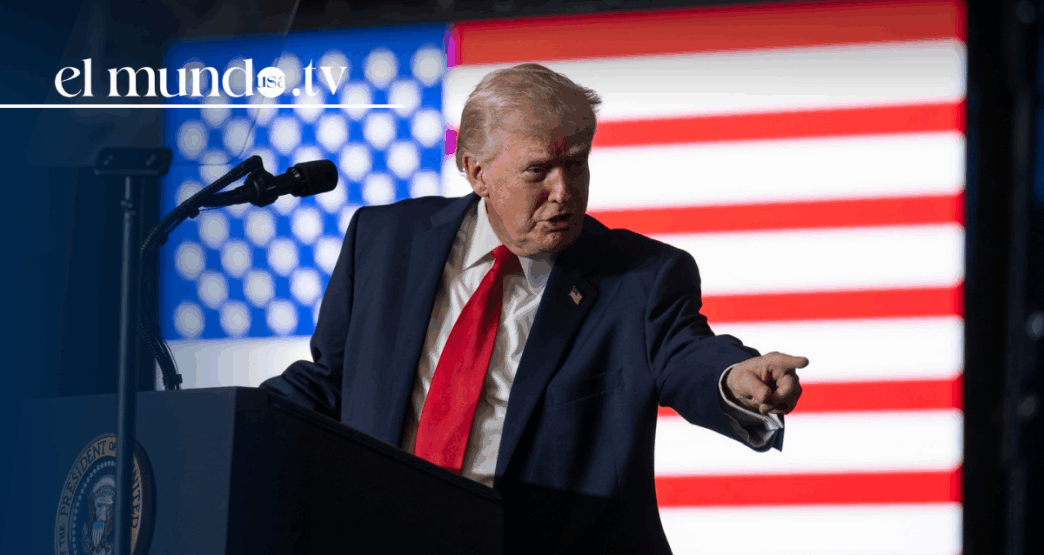
President Donald Trump signed an executive order empowering his administration to impose tariffs on goods from countries that sell or supply oil to Cuba, as part of a national emergency declaration concerning the Caribbean island. The move marks a further tightening of U.S. policy toward Havana and aims to pressure third-party nations with energy ties to the Cuban government.
In the text of the order, Trump asserts that the Cuban regime’s relationship with various international actors “constitutes an unusual and extraordinary threat to the national security and foreign policy of the United States,” justifying the emergency declaration. The order states that Washington may impose additional tariffs on imports from countries that directly or indirectly provide oil to Cuba.
The president also argued that the Cuban government “aligns with, and provides support to, numerous hostile countries, transnational terrorist groups and malign actors adverse to the United States,” including Russia, China, Iran, Hamas and Hezbollah, which he considers adversarial to U.S. interests.
The national emergency declaration and tariff threat come amid growing regional tensions, intensified by reports that Mexico has become one of the main suppliers of oil to Cuba, even surpassing Venezuela’s historic role after that country’s supply collapsed. Commercial and oil industry data show that between January and September 2025, Mexico exported about 17,200 barrels per day of crude oil and 2,000 barrels of derivatives to the island, solidifying its strategic role in Cuba’s energy supply.
The Mexican government has defended these deliveries as a form of humanitarian aid and solidarity, but they have also drawn sharp criticism from members of the U.S. Congress, who argue that such shipments strengthen a regime Washington considers a strategic adversary.
Although the executive order does not explicitly mention Mexico, it paves the way for potential indirect trade sanctions, at a sensitive time for bilateral relations. The United States and Mexico are currently engaged in a review of the United States–Mexico–Canada Agreement (USMCA), with energy and trade policies under heightened scrutiny in Washington and across the region.