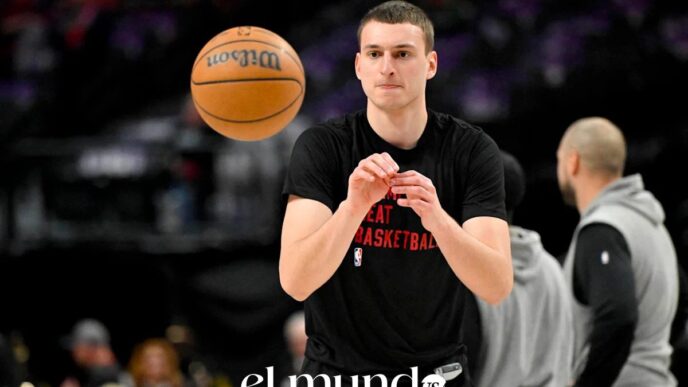
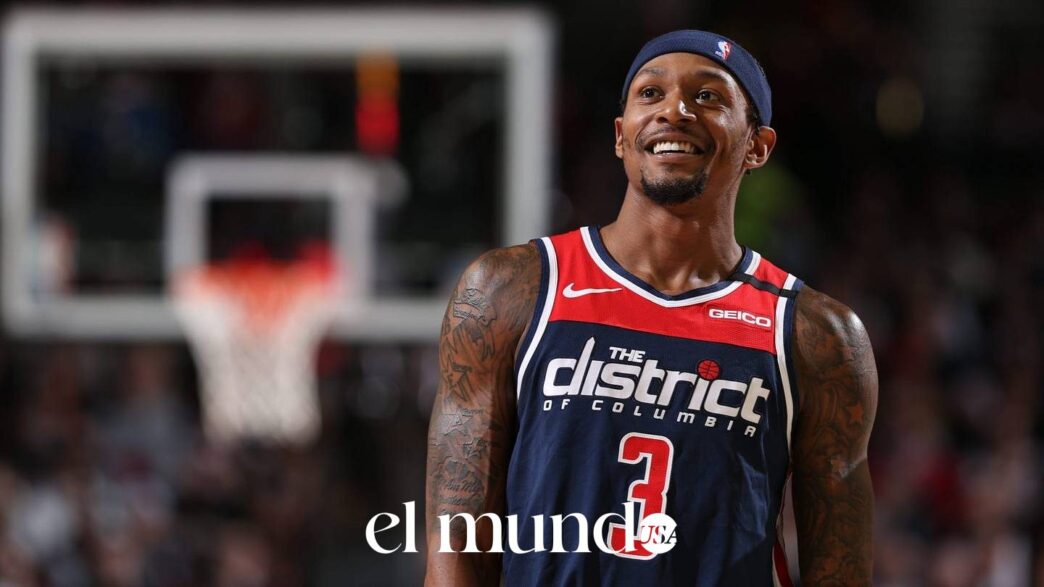
The Miami Heat faithful have long dreamed of seeing Bradley Beal don the iconic red and black jersey. As free agency discussions heat up on August 10, 2026, the question on every basketball fan’s mind is whether bringing the veteran guard to South Beach makes sense. For Latino fans across South Florida and beyond, the Heat represent more than just basketball—they embody a cultural institution where passion meets excellence.
However, before Heat Nation gets swept up in nostalgia for what could have been, a deeper examination of Beal’s recent trajectory reveals troubling patterns that any front office must seriously consider. The 33-year-old shooting guard once ranked among the league’s most electric scorers, but time and injuries have painted a different picture.
Beal’s Prime Years in Washington
There exists a certain category of scorer who makes basketball appear effortless. The elite footwork, the graceful rise in the shooting motion, the way the ball leaves the hand with inevitable precision—Bradley Beal embodied this archetype throughout his career. During his tenure with the Washington Wizards, he established himself as one of the premier offensive talents in the NBA.
The 2020-21 season represented the pinnacle of Beal’s scoring prowess. He poured in an astounding 31.1 points per game, finishing second in the entire league in scoring. That campaign showcased everything that made him special—the ability to create his own shot, the deadly mid-range game, and the clutch performances that had Miami fans fantasizing about what he could accomplish within Heat Culture.
For those who followed Beal since his college days at Florida, watching him develop into a premier scorer felt like witnessing inevitable greatness. His game possessed a smoothness that few players could replicate, making him an obvious target for championship-contending franchises seeking offensive firepower.
Availability Concerns and Injury History
The uncomfortable reality about admiring a player is that memory often freezes them at their absolute best. However, the cold statistics tell a different story about Beal’s recent availability. Following that remarkable 2020-21 campaign where he appeared in 61 games, the numbers began a concerning descent.
His games-played column reads like a countdown: 40 games one season, then back up to 50, followed by 53 appearances. Then 53 again. Most alarmingly, his most recent season saw him play just 6 games before a fractured left hip ended everything in November and required surgery. Medical professionals compared the injury severity to trauma sustained in a car accident.
Those 6 games represented the entirety of his Clippers experiment. To put this in perspective, Beal has not cleared 60 games in a season in half a decade. Over his last four seasons, he has averaged roughly 40 appearances per year. For a guard whose entire value proposition centers on high-volume scoring, this lack of availability fundamentally undermines what he brings to a roster.
The Concerning Injury Pattern
What proves more troubling than the sheer number of injuries is the pattern they reveal. Across recent seasons, Beal kept stacking problems on the same side of his body. The cascade began with a left ankle issue, progressed to a left calf, then a left knee, and ultimately culminated in the left hip fracture.
Beal himself acknowledged this reality, noting almost offhandedly that it was “the same side of everything else.” When injuries cluster along one kinetic chain like this, medical experts recognize it rarely represents random misfortune. Instead, the body compensates around something it cannot resolve while quietly redistributing load it cannot handle cleanly.
Eventually, that accumulated stress breaks down wherever the extra strain finally lands. A torn ACL heals, and players eventually move forward. But a body that keeps failing along the same chain sends structural messages about how it absorbs and transfers force. At 24 years old, rebuilding these patterns remains possible. At 33 years old, management becomes the operative word—and management in practice translates to missed games.
A hip fracture differs fundamentally from an ankle that can simply be taped up. It represents a structural injury to the single most important joint in basketball, accounting for the hinge in every jump, cut, and closeout a player executes.
Statistical Decline by the Numbers
Father Time remains undefeated, as the saying goes. Setting aside the injury concerns, the on-court version of Bradley Beal was already showing decline before the hip gave out. The scoring trajectory tells its own story clearly.
Consider the progression: 31.1 points in 2020-21 dropped to 23.2 points the following season. Then 23.2 again. His first Phoenix season saw production fall to 18.2 points, followed by 17.0 points the next year. His brief Clippers tenure produced just 8.2 points per game across those 6 appearances.
Some portion of this decline stems from changing roles. Beal transitioned from first offensive option to third or fourth wheel on rosters featuring other stars. However, the efficiency metrics also slipped, suggesting the drop extends beyond simple role adjustment. When a scorer’s primary value lies in creating offense, diminishing returns raise fundamental questions about long-term investment.
Heat Culture and Long-Term Fit
The Miami Heat organization has built its reputation on demanding maximum effort and accountability from every player who wears the jersey. Heat Culture represents more than a marketing slogan—it reflects a genuine organizational philosophy that has produced championships and turned overlooked players into stars.
For the vibrant Latino community throughout South Florida, the Heat serve as a unifying force that transcends basketball. The team’s success matters to families gathering in Little Havana, professionals in Brickell, and communities from Hialeah to Homestead. Any roster decision carries implications for this passionate fan base.
The honest assessment is that handing a 33-year-old Bradley Beal a long-term contract presents significant risk. While the desire to see him succeed remains genuine regardless of which jersey he wears, the evidence suggests caution. Front offices must balance nostalgic appeal against practical reality.
Prime Beal in his mid-twenties dropped into Heat Culture would have represented a fantasy worth paying season ticket prices to witness. The current version, carrying accumulated wear and structural concerns, poses different questions entirely. Championship windows require careful asset management, and committing substantial resources to a player averaging roughly 40 games annually over four seasons demands serious consideration.
The hope remains that Beal proves every skeptic wrong. His game at its best still shows flashes of that effortless scorer who made basketball look simple. Whether that player can appear consistently enough to justify major investment is the question Miami’s front office must answer carefully.
How many games has Bradley Beal averaged recently?
Over his last four seasons, Beal has averaged approximately 40 appearances per year. He has not cleared 60 games in a season in half a decade, with his most recent season ending after just 6 games due to a fractured left hip.
What was Bradley Beal’s best scoring season?
Beal’s peak came during the 2020-21 season when he averaged 31.1 points per game, finishing second in the entire NBA in scoring while playing for the Washington Wizards.
What injury ended Beal’s most recent season?
📘 Follow El Mundo USA on our social networks: Facebook | Twitter
A fractured left hip ended Beal’s season in November after just 6 games with the Clippers. The injury required surgery and was compared by medical professionals to trauma from a car accident.