The Miami Heat have dominated offseason conversations since June, with fans and analysts alike questioning whether the roster can shoot from beyond the arc. Can they space the floor around Giannis Antetokounmpo? Who fills the void left by Tyler Herro and Norman Powell? While these are valid concerns, there’s a more pressing issue that deserves attention: free throw shooting.
As the team prepares for the upcoming season, the architecture of Miami’s offense suggests they’ll live at the charity stripe. The problem isn’t getting there — it’s converting once they arrive. This overlooked weakness could prove more costly than any spacing concerns throughout the 2026-2027 campaign.
Why Free Throws Matter More Than You Think
The free throw represents basketball’s purest possession. No defender, no clock pressure beyond the routine, just shooter and rim. For a league-average shooter, two free throw attempts are worth approximately 1.56 points. For a team shooting 70 percent, that value drops to 1.40 points.
That gap might sound negligible, but spread across roughly 25 attempts per game, the difference between a 70 percent free throw team and an 80 percent squad amounts to about 2.5 points every night. In the NBA, that margin decides an alarming number of games.
Consider playoff basketball, where every possession carries championship implications. A 2.5-point swing can determine not just individual games but entire series outcomes. For a franchise with title aspirations, this mathematical reality demands serious attention.
Giannis Antetokounmpo: Rim Pressure Machine
The Greek Freak remains one of the most relentless downhill forces in NBA history. His ability to attack the basket creates constant contact, generating foul after foul. Last season, despite playing just 36 games, Giannis converted 232 free throws.
That production translates to roughly ten attempts per night — an extraordinary volume that underscores his physical dominance. However, his 65.0 percent free throw percentage last season sits well below league average, while his career mark of 69.1 percent offers only marginal improvement.
At ten attempts per game, the difference between shooting 65 percent and league average costs Miami approximately 1.3 points per game. Across a full 82-game season, that’s more than 100 points left on the floor by a single player taking uncontested shots.
This observation carries no disrespect toward a two-time MVP who represents the primary reason Miami enters 2026-27 as a legitimate contender. Yet honest evaluation reveals his free throw efficiency has declined from earlier career heights.
Bam Adebayo and Supporting Cast Concerns
Bam Adebayo operates as Miami’s secondary rim attacker, absorbing tremendous contact in the paint nightly. His 75.9 percent career free throw shooting qualifies as respectable but hardly elite. When championships hang in the balance, Bam isn’t the player opponents fear sending to the line.
Pelle Larsson emerged as a bright spot, converting just under 80 percent from the stripe last season. That figure represents genuinely strong shooting, yet his free throw rate sat in the 22nd percentile. He simply doesn’t draw enough fouls to maximize this skill.
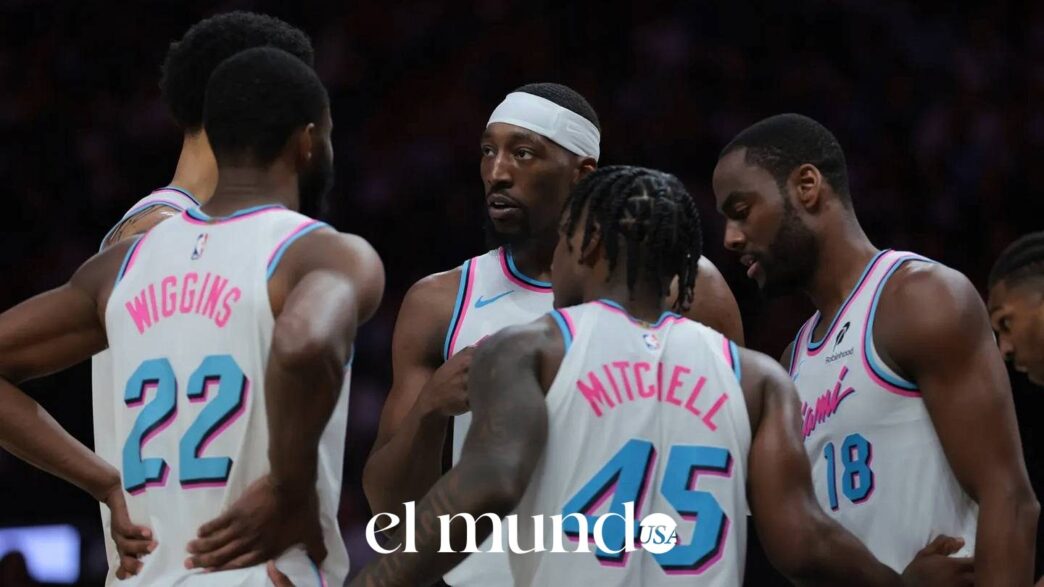
The roster’s other regular rotation players present similar concerns. Davion Mitchell’s free throw rate mirrors Larsson’s limited volume, but he converts under 70 percent. Bobby Portis also shoots around 70 percent while his attempt volume ranks in the bottom fifth of the league.
The Shooters Don’t Get Fouled
Miami’s roster does include players who excel at the charity stripe. Four players currently shoot above 80 percent from the line. However, their roles don’t position them for frequent trips.
Ryan Conwell arrives as a rookie whose free throw prowess remains untested at the NBA level. Dru Smith provides value primarily on defense, limiting his offensive touches. Meanwhile, Tim Hardaway Jr. and Simone Fontecchio operate as perimeter shooters who rarely venture into the paint where fouls occur.
This creates an inverse correlation problem that plagues the Heat roster. The players who will get fouled frequently aren’t reliable free throw shooters. The players who can convert at the line don’t draw enough fouls to matter.
Offensive Architecture Built for Contact
Everything Miami constructed this summer points toward rim pressure. Giannis leads the charge as the primary paint attacker. Bam supports with his own interior game. Andrew Wiggins and Pelle Larsson attack closeouts by design.
This offensive philosophy will generate fouls at a high rate. Rim pressure produces contact, and contact produces free throw attempts. The Heat will almost certainly rank among the league leaders in trips to the line.
Yet that advantage becomes a liability when conversion rates lag. Drawing 30 free throws per game means nothing if the team shoots 68 percent while opponents shoot 78 percent on fewer attempts.
Harder Problem Than Three-Point Shooting
Three-point shooting concerns can be addressed through roster construction. Add a shooter here, space the floor differently there. Teams regularly solve spacing issues through trades, free agent signings, or developmental improvements.
Free throw shooting presents a more stubborn challenge. It’s a deeply personal skill tied to routine, mechanics, and mental approach. Players either have it or they don’t, and dramatic improvements are rare at the professional level.
Giannis has worked on his free throw stroke throughout his career with limited results. His percentage fluctuates but never reaches league average. Expecting a massive improvement at this stage seems optimistic at best.
What This Means for Heat Fans
Miami supporters should prepare for nail-biting fourth quarters where missed free throws extend leads or surrender them. The difference between a championship team and a playoff exit often comes down to execution in crunch time.
The Heat will generate opportunities at the line. Their offensive design guarantees it. Whether they can convert those opportunities into points will likely determine their ceiling. A team that leaves 2.5 points per game on the floor faces an uphill battle against elite competition.
Coaching adjustments could help marginally. Perhaps Erik Spoelstra’s staff finds ways to get better free throw shooters more involved in late-game situations. Maybe rookie Ryan Conwell earns enough trust to handle crucial possessions.
Season Outlook for Miami
The roster remains incomplete with spots still to fill before October. A move or two could meaningfully alter these projections. Perhaps Miami targets a guard who attacks the basket while shooting 85 percent from the line.
As currently constructed though, the Heat face a mathematical disadvantage that spacing discussions overlook. Three-point shooting matters, but free throw shooting might matter more for this particular group.
The 2026-27 season will test whether Miami can overcome this structural weakness. With Giannis leading the charge and Bam supporting in the paint, the Heat will certainly be entertaining. Whether they can maximize their trips to the line could determine everything else.
Why is free throw shooting considered Miami’s biggest weakness?
The players who get fouled most often — particularly Giannis Antetokounmpo at 65 percent and Bam Adebayo at 75.9 percent — aren’t elite free throw shooters. Meanwhile, players who shoot above 80 percent from the line don’t get fouled enough to impact games.
How many points could Miami lose due to poor free throw shooting?
The difference between a 70 percent free throw team and an 80 percent team across roughly 25 attempts per game equals about 2.5 points per night. For Giannis alone, shooting 65 percent instead of league average costs approximately 1.3 points per game, totaling over 100 points across a full season.
Who are Miami’s best free throw shooters?
Tim Hardaway Jr., Simone Fontecchio, Dru Smith, and rookie Ryan Conwell all shoot above 80 percent from the line. However, these players either operate primarily as perimeter shooters who don’t draw many fouls or provide value mainly on defense.