
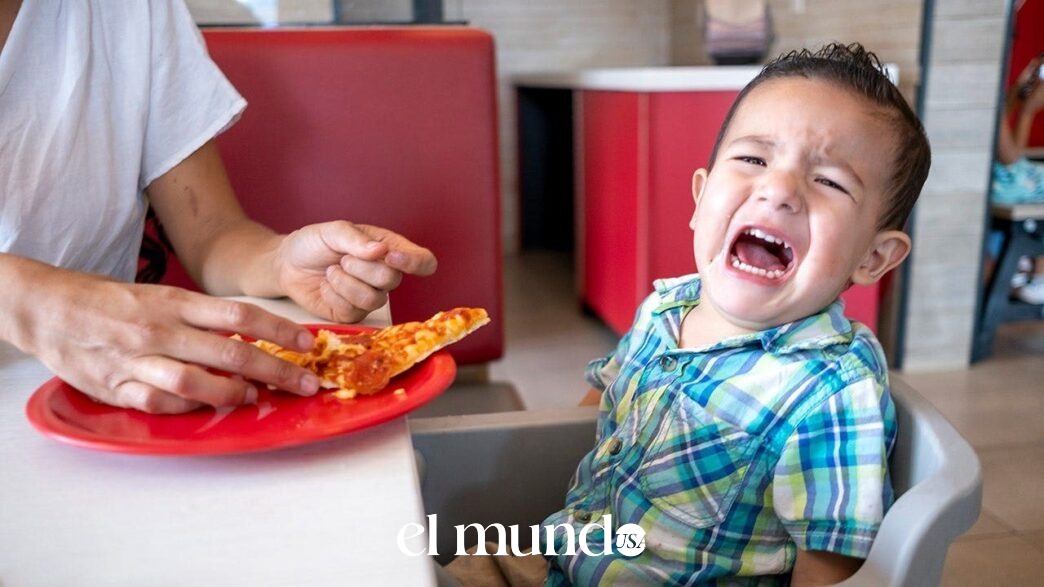
A significant majority of Americans believe restaurants should offer some form of adults-only dining experience, according to a new survey that reveals shifting attitudes about how people want to enjoy their meals out. The survey by Lightspeed Commerce found that 75% of the 1,000 U.S. adults polled support restaurants providing options for child-free environments.
The findings, published on May 27, 2026, show that nearly half of respondents favor specific restrictions, including limiting children during late-evening hours and creating designated adults-only sections within restaurants. Perhaps most surprisingly, parents expressed even stronger support for these options than non-parents.
Survey Reveals Strong Support Across Multiple Categories
The Lightspeed Commerce survey broke down American preferences for adults-only dining into several categories. Among the 1,000 respondents, 49% supported restricting children during late-evening hours, while 46% favored designated adults-only sections within restaurants. An equal 46% said romantic dining environments should be child-free.
Additionally, 43% of those surveyed supported restrictions at alcohol-focused venues, reflecting concerns about the appropriateness of certain dining atmospheres for minors.
Adoniram Sides, Lightspeed’s Rhode Island-based senior vice president of hospitality product, explained the significance of these findings. “The clearest signal in the data is that adults-only dining is no longer a niche concept tied to luxury or exclusivity. Hospitality businesses are increasingly creating situational experiences. Whether for late-night meals, romantic settings or rooftop lounges — consumers are willing to pay for atmospheres tailored to specific occasions,” Sides said.
Parents More Supportive Than Non-Parents
One of the most striking findings from the survey is that parents actually support adults-only dining options more than those without children. This counterintuitive result suggests the trend is not primarily driven by frustration with children in restaurants.
“What’s particularly striking is that parents are even more supportive than non-parents, suggesting this trend is being driven less by frustration with children and more by changing expectations around how people want to socialize and spend their nights out,” Sides noted.
This finding indicates that parents themselves value the option to enjoy adult-focused dining experiences when they choose to dine without their children, viewing it as a different type of social occasion rather than an anti-child stance.
Restaurants Already Adapting to Consumer Preferences
Some restaurants across the United States have already implemented adults-only policies in response to customer demand. Capo’s Restaurant and Speakeasy in Las Vegas shifted to an adults-only model after its first decade of business allowing children.
Owner Nico Santucci explained the reasoning behind the decision. “In a speakeasy, particularly in Las Vegas, people get pretty loose. We’d like folks to be comfortable and to be able to speak freely,” Santucci said.
Santucci drew a comparison to air travel to illustrate the impact of dining atmosphere. “It’s like being on a flight and sitting next to a toddler. I mean, that’s a different flight, isn’t it? It’s a whole different flight,” he said. He also emphasized that certain environments are simply not appropriate for minors, adding, “It’s just not appropriate and more for the safety of minors.”
Family-Friendly Restaurants Finding Middle Ground
Not all restaurant owners see a need for strict adults-only policies. Vicki Parmelee, owner of Jumby Bay Island Grill in Jupiter, Florida, operates a family-friendly establishment but remains flexible to accommodate different customer preferences.
“I would definitely accommodate someone if they asked to be seated away from children. No problem,” Parmelee said. She added that she does not oppose high-end restaurants implementing restrictions. “I don’t have a problem if a high-end restaurant has restrictions regarding kids, just as they can set dress codes according to the clientele they want to attract.”
Parmelee emphasized that turning away business is not part of her approach. “I’m not going to turn that business down,” she stated, reflecting the perspective of restaurants that welcome families while still trying to meet varying customer needs.
Etiquette Expert Weighs In on Dining Dynamics
Jacqueline Whitmore, a Florida-based etiquette expert and founder of the Protocol School of Palm Beach, offered perspective on balancing the interests of different diners. She emphasized that dining out serves an important social function for families.
“Dining out is not only about the meal — it is a social experience that teaches children how to behave in public,” Whitmore said. However, she also acknowledged the responsibility that comes with bringing children to restaurants. “Parents should be mindful of noise levels, running around the restaurant or any other behavior that disrupts other guests.”
Whitmore shared her own approach as someone without children. “My husband and I do not have children, and we will occasionally ask the host or hostess for a ‘quiet table.’ As a customer, you can request any seat, as long as it’s available and not reserved. But do it politely,” she advised.
The etiquette expert summarized the hospitality perspective on accommodating diverse customer needs. “A guest’s time and money spent dining out is valuable, and whether you are a couple wanting a quiet dinner out or a parent who wants to include children, I would try to diplomatically accommodate you. That’s what hospitality is all about,” Whitmore said.
What This Means for the Restaurant Industry
The survey results suggest that restaurants may increasingly consider offering varied dining experiences to meet consumer demand. The data indicates this is not about excluding families entirely but rather about providing options for different occasions and preferences.
With three-quarters of Americans expressing support for some form of adults-only dining, restaurants may find business opportunities in catering to specific atmospheres and experiences. The strong support from parents themselves suggests that families understand and even welcome the option to choose between family-friendly venues and adult-focused dining experiences.
The trend appears to align with broader consumer expectations for customized experiences in the hospitality industry, where diners increasingly seek environments tailored to specific occasions rather than one-size-fits-all approaches.
Frequently Asked Questions
What percentage of Americans support adults-only dining options?
According to the Lightspeed Commerce survey of 1,000 U.S. adults, 75% of respondents said restaurants should offer some form of adults-only dining experience.
Do parents support adults-only restaurant sections?
Yes, the survey found that parents are actually more supportive of adults-only dining options than non-parents, suggesting the trend reflects changing expectations about socializing rather than frustration with children.
What types of adults-only dining restrictions do Americans favor most?
The survey found 49% support restricting children during late-evening hours, 46% favor designated adults-only sections, 46% want child-free romantic dining environments, and 43% support restrictions at alcohol-focused venues.
Can customers request seating away from children at restaurants?
According to etiquette expert Jacqueline Whitmore, customers can request any available seat, including a quiet table away from children, as long as they ask politely and the seating is not reserved.
The survey findings reflect evolving American attitudes toward dining experiences, with a clear majority expressing interest in having options for adults-only environments while the restaurant industry continues to balance the needs of different customer groups.