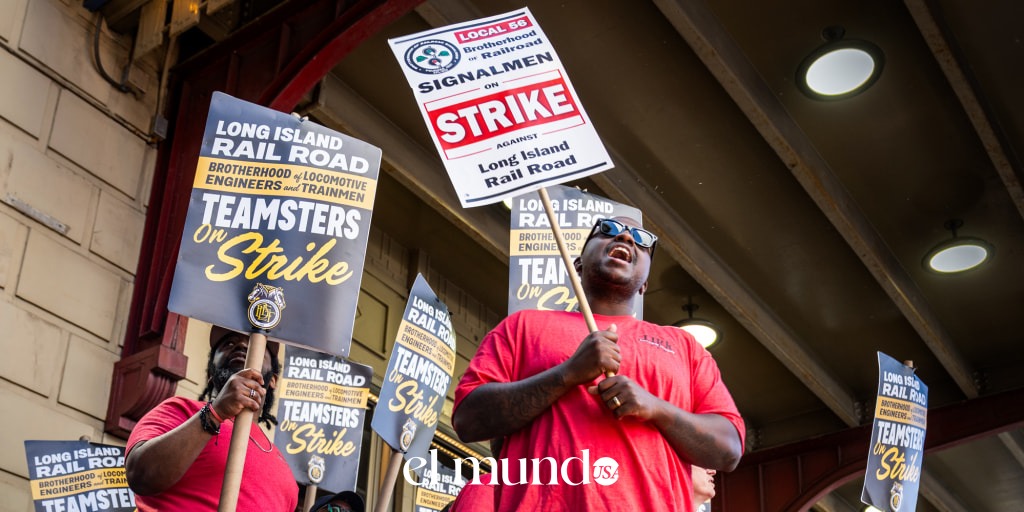
Long Island Rail Road workers walked off the job Saturday after contract negotiations with the Metropolitan Transportation Authority broke down, halting service on the nation’s busiest commuter rail system. This marks the first LIRR strike in roughly 30 years, leaving hundreds of thousands of riders between Long Island and New York City without their primary means of transportation for the Monday morning commute.
Governor Kathy Hochul and other officials urged commuters to work from home Monday as emergency transit alternatives, including shuttle buses from Long Island to Queens and additional subway service, were being prepared. A coalition of unions representing approximately 3,500 LIRR workers returned to the bargaining table Sunday evening, though service remained suspended.
Main Developments in the Long Island Rail Road Strike
The strike began Saturday when workers walked off the job following failed contract negotiations Friday night. According to union officials, the two sides were separated by less than 1 percentage point before talks collapsed. The dispute centers on wage increases amid rising living costs in the Long Island and New York City area.
On Sunday, approximately 100 people were striking outside Penn Station, while about 2,000 workers were picketing throughout MTA properties on the LIRR. Five unions make up the coalition that called the strike, representing roughly 3,500 railroad employees including locomotive engineers, trainmen, and other essential workers.
Governor Hochul held a news conference Sunday addressing the situation. She stated: “New York is a pro-labor state. We believe in working men and women receiving a fair wage and benefits, but the MTA cannot agree to a contract that would raise fares as much as 8% and risk hiking taxes for Long Islanders.”
MTA CEO Janno Lieber defended the agency’s position during the negotiations, saying: “We made it clear we are available if they want to come back and negotiate. They walked out and they went on strike.”
What We Know So Far
The LIRR is the nation’s busiest commuter rail system, carrying hundreds of thousands of riders between Long Island and New York City daily. The complete shutdown of service represents a significant disruption to the regional transportation network.
Hochul and officials acknowledged the difficulty of the situation. As the governor stated: “Let’s face the facts: It’s impossible to fully replace LIRR service.”
Union members have expressed their determination to continue the strike until an agreement is reached. Eric Martin, a locomotive engineer who has been with his union for 24 years, explained that workers are striking “to keep a fair wage for ourselves, for our family, and our friends.”
Jim Louis, national vice president of the Brotherhood of Locomotive Engineers and Trainmen, said: “It might take a couple of days, but the end result is we will come to a resolution. If we have to stand out here two weeks, two months, we will do what is necessary to make it happen.”
Michael Sanchez, assistant national representative with the Transportation Communications Union, emphasized the unity among the five unions in the coalition: “Our coalitions — we have five unions here — they are very strong. The only way that we can get an agreement is for the MTA to understand that all our membership is asking for is to just try to keep their heads above water with the standard of living.”
What Happens Next
The union coalition returned to the bargaining table Sunday evening, signaling a potential path toward resolution. However, as of the latest reports, service remained suspended with no immediate end to the strike announced.
IAM Union International President Brian Bryant issued a statement addressing the situation: “Long Island Rail Road workers want to be doing what they’ve always done — serving the riding public and keeping LIRR moving safely and efficiently. But after years without raises and with the cost of living continuing to climb across Long Island and the New York City area, workers deserve a fair contract that recognizes their contributions and sacrifices. This strike was completely avoidable, and the coalition remains ready to negotiate at any time if MTA leadership is finally prepared to bargain seriously.”
New York City Mayor Zohran Mamdani and Governor Hochul have been working to coordinate emergency transit measures while encouraging residents to seek alternatives to commuting when possible.
Emergency Transit Alternatives for Monday
Shuttle buses for essential workers began operating at approximately 4:30 a.m. Monday from six locations across Nassau and Suffolk counties. These buses are designed to transport essential workers from Long Island to Queens, where they can connect to subway service into Manhattan.
Officials have also prepared additional subway service to help accommodate the expected surge in riders using alternative routes. However, given the scale of LIRR ridership, authorities have emphasized that these measures cannot fully replace normal railroad service.
The primary recommendation from officials remains for workers who can work remotely to do so Monday. Commuters who must travel are advised to plan for significant delays and consider all available alternatives.
Impact on Commuters and the Region
The strike affects commuters traveling between Long Island, Queens, and Manhattan. The LIRR serves as a critical transportation link for workers, students, and residents throughout the region.
The six shuttle bus pickup locations are spread across Nassau and Suffolk counties, though specific locations were established to serve essential workers who cannot work remotely. These emergency measures represent a coordinated effort between state and local transportation agencies.
The strike comes during a regular work week, maximizing its impact on the regional economy and daily commuters who depend on the railroad.
Background on Contract Negotiations
The contract dispute centers on wage increases, with unions arguing that workers need raises to keep pace with the rising cost of living in the New York City metropolitan area. According to union officials, negotiations had progressed to the point where the two sides were separated by less than 1 percentage point before talks broke down Friday night.
The MTA has expressed concerns about the financial implications of union demands, with Governor Hochul citing potential fare increases of up to 8 percent and possible tax increases for Long Island residents.
Both sides have stated their willingness to negotiate, though they differ on characterizations of why talks failed. The resumption of negotiations Sunday evening offered hope for a potential resolution.
Frequently Asked Questions
When did the Long Island Rail Road strike begin?
LIRR workers walked off the job Saturday after contract negotiations with the MTA broke down Friday night. This is the first LIRR strike in roughly 30 years.
Are there shuttle buses available during the LIRR strike?
Yes, shuttle buses for essential workers began operating at approximately 4:30 a.m. Monday from six locations across Nassau and Suffolk counties, transporting riders to Queens to connect with subway service.
How many workers are on strike?
A coalition of five unions representing roughly 3,500 LIRR workers called the strike. About 2,000 workers were reported picketing throughout MTA properties on the LIRR on Sunday, with approximately 100 striking outside Penn Station.
What should LIRR commuters do during the strike?
Governor Hochul and officials urged commuters to work from home Monday if possible. Those who must travel should plan for significant delays and consider using shuttle buses or alternative subway routes.
Are negotiations ongoing between the unions and MTA?
The union coalition returned to the bargaining table Sunday evening. Both sides have stated their willingness to negotiate, though the strike continues with no announced resolution as of the latest reports.
The situation remains fluid as both the union coalition and MTA continue negotiations. Commuters are advised to monitor official announcements from the MTA and state officials for updates on service restoration and emergency transit alternatives.